
Pro(ductivity)cession
Here's Why It Is Such A Big Deal

August 6th, 2026 - Volume 12 (2026) Missive 99 (Thursday)
Labor’s share is the Fed’s biggest problem
Surplus productivity has been allowed to go on for too long
The Fed’s up a strong creek with weak paddles
This is the most important point to be made about the U.S. economy today. In order for the Federal Reserve to be successful, they have to arrest the appalling shift lower in labor’s share of income. In order to do that, they have to tackle surplus productivity head on. And as this morning’s first look at second quarter non-farm labor productivity report points out (as well as and the fact that they’re dealing with an actual fundamental and not some sort of behavioral concept) that will be much, much easier said then done.
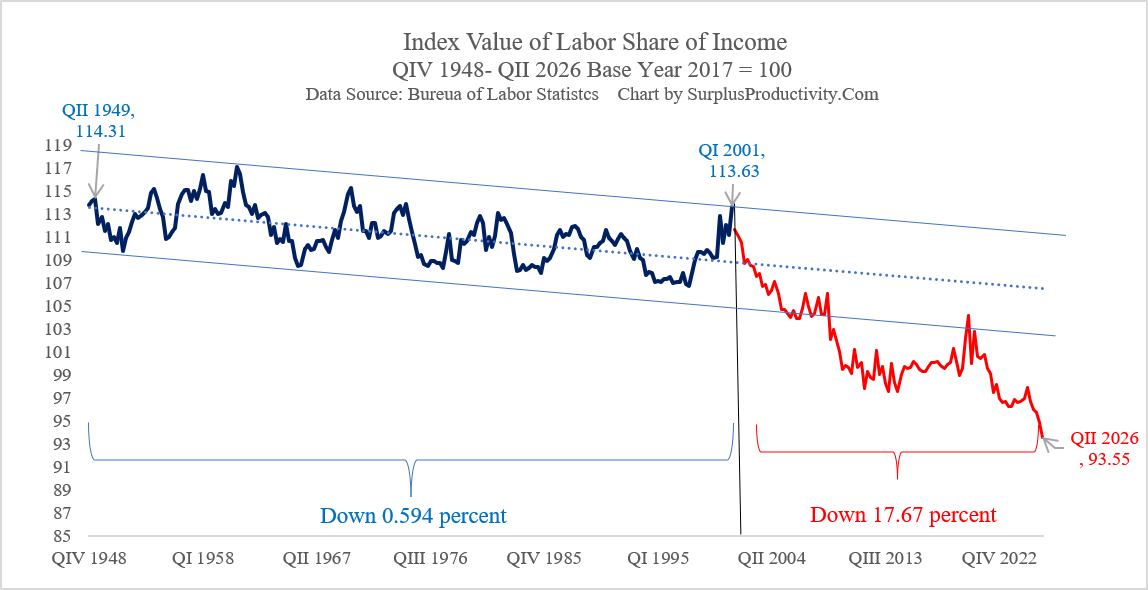
Nothing can compare to the disaster that is labor’s share.
According to the headline numbers, the overall rate of labor productivity grew at a1.7 percent annual percentage rate in QII 2026 compared to the 0.3 percent pace it set in the first quarter. A function of output per hour, labor productivity has been promoted in recent years by a steep drop in the overall share of income earned by labor. Surplus productivity makes labor increasingly cheap relative to the potential of the output it produces. Therefore, will incomes have been increasing, the relative nature of their impact has been falling. In fact, other areas of incomes’ shares have been growing at the expense of labor. More specifically,
